Fuel Consumption: Myths and Tips

Image

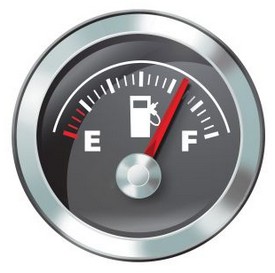
Many people think that after the first or second service of their new car, fuel consumption will magically improve. This is now a myth, because the fuel system in new generation cars is controlled by the ECM (Engine Control Module), not the carburetor. There is no wear and tear in ECMs. As a result, performance will always stay the same, unlike in older generation cars where you could manually adjust the carburetor for improved fuel consumption. In this article, I will go over my preferred method to check fuel consumption and also discuss the best ways to lower fuel consumption.

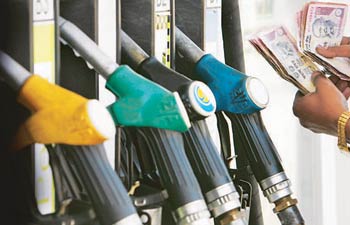
First, the best way to check fuel consumption: Whenever you go on a highway, fill the tank to its absolute maximum capacity. (By this, I mean till the neck. Even after the auto stop, the tank can take in another 10% of fuel). Then wait for a few seconds. If the tank is full and without bubbles, close the cap, zero the odometer, and drive for 100km. Now fill the tank till the neck, once again. Say you manage to fill in 10 litres. You can now divide the distance travelled by the fuel taken. In this case, 100km / 10 litres = 10km per litre of fuel. In a similar way, you can check fuel consumption in city traffic.

The actual fuel tank capacity of most cars is 10% more than the capacity listed by the manufacturer. Some people take advantage of this anomaly at fuel stations. I have personally witnessed one such incident, in which the customer was fighting with the fuel station employee over how it was possible that he filled 55 litres, when the tank capacity listed in the owner’s manual was 50 litres. In this situation, the fuel station employee must stand by his meter. However, sometimes, as in this case, they get scared and let the customer go for free.

If, after checking fuel consumption you are unsatisfied with the results, you may be tempted to go to the workshop for ‘adjustments’. Do not do this, because new generation cars do not have carburetors. It would be a waste of your time and fuel.

Similarly, don’t fight with sales people over low fuel consumption. They will tell you that the advertised fuel consumption is obtained only in desired conditions, i.e, continuously driving at 50 km/h in fifth gear. This, of course, is possible only on new highways. If you get low fuel consumption even in these conditions, it is simply down to inefficient driving. If you are confident that you are a good and experienced driver, then:

  • Change the fuel station and check.
  • Change bumper to bumper traffic route (perhaps not possible in cities?)
  • Take routes which have fewer traffic signals. Every one minute that you leave your car idling, you are wasting approximately 25ml of fuel. Every forty minutes, you waste one litre. Now you can calculate how much fuel you may be wasting on a daily basis going to and from work.

It is my wish that more people take an interest in lowering their fuel consumption. I notice people boasting of how they’ve gone from Hyderabad to Bangalore in 5 hours, only for another to say he’s gone in 4.5 hours, before someone else claims he’s done the distance in 4 hours. One day I want to see people arguing over who got better fuel consumption. If this is how people start to think, maybe our grandchildren will also have fuel.

Posted in Advice | Tagged , | 1 Comment

Caution: Monsoon is Coming

Do any car owners know the location of the air suction pipe into the inlet manifold of their car’s engine? Before buying a car, ask the sales executive about this. If he doesn’t know tell him to find out, but at any rate, make sure you know.

Most cars have it located in front of the engine, exactly above the grill or on either side of the front fender lining.

This is very important to know, otherwise you run the risk of paying huge bills. These days, hydrostatic locks are occurring quite frequently (especially in high end cars – maybe you can guess the ones I’m referring to), so much so that even insurance companies aren’t covering hydrolocks due to losses for their companies. For this reason, be sure to find out whether or not hydrostatic locks are covered in your insurance policy. If it costs extra, I would advise taking it unless you are confident in your ability to avoid hydrolocks.

The reason these problems are growing is because of the poor drainage system in our country, which is especially apparent in the monsoon season. Furthermore, car companies – particularly the foreign ones – are not concentrating on this problem, and falsely stating that they made their cars for Indian conditions.

Tips to avoid hydrolocks

  • If you know where the air inlet suction pipe is for your engine, then feel free to drive into water logs, taking care to make sure that the air inlet suction pipe is above the water level. Otherwise, the engine will suck water instead of air, and as water is incompressible, the engine will get damaged, possibly even breaking.
  • If you’re doubtful, don’t take chances in water logs. Better to avoid than trying to play the hero and following others.
  • Perhaps you’ve noticed two and three wheelers going fast in water logs. I’m unsure whether they think that’s the right thing to do or that they’re trying to show heroism. You might have seen many of these same two and three wheelers trying to start their stalled vehicles, usually after the water log. This happens due to splashed water falling on the sparkplugs and high tension plug cables, due to driving fast in water logs.
  • Always remember to go slow in a water log. If the water is above the rear exhaust pipe, you should keep the RPM above 2000, while slowly pressing the clutch halfway. Try to avoid splashing water while in a water log. If you don’t keep the RPM above 2000, water will enter the exhaust and stall the engine. I don’t have to tell you how inconvenient it can be when your car stalls in a huge puddle of water and you’re heading to a party, or worse, the airport.

The key to avoiding all these problems is to know the position of inlet suction pipe, so you can then take care to keep it exposed to air and above the water level. Not only will this save you money, it will keep you from having to ask yourself how to go to the office for a month while your car is stuck in the garage.

Posted in Advice | Tagged , , , , | 3 Comments

Reduce pollution while saving money and getting a smoother drive

Do we not get good fuel in India? It seems to me that soon after refueling, fuel injectors get clogged, petrol cars start jerking, diesel engines start smoking, and sometimes, the engine check light comes on. If you take the vehicle for a pollution level check, a genuine inspector wouldn’t approve it.

Furthermore, because of new generation automobiles, oil companies have begun supplying normal as well as premium fuel. This has made it convenient for 90% of petrol bunks to make easy money, by selling normal fuel and charging for premium fuel.

When you take the car to a workshop, they will replace the Oxygen sensor to make the engine check light go. Then, regardless, they will suggest that the fuel injectors need cleaning or that the engine needs decarbonising.

Please, never get this done. Unless all you want to do is pay a fat bill.

The much simpler remedy to this is to protect the fuel injectors.

Fuel injectors are some of the most important parts of new generation engines. First seen in India in the Daewoo Cielo, they have today completely replaced the carburetor. However as mentioned, they happen to be expensive, so for the sake of your wallet as well as your environment, care must be taken to protect them.

Steps to protect your injectors:

  • Please always use normal fuel. (Read above for the reason)
  • Use a fuel additive – either at every refueling or every alternate refueling. Most fuel stations will have one. Directions are written on the bottle – there is no harm in using it at every refueling.
  • No harm in using additive for a brand new car.
  • If you are confident that you are getting good quality fuel, use a fuel additive every 10,000 km. 180ml of additive lasts for 180 liters of fuel.
  • Only in extreme cases do you need to get the injectors cleaned and calibrated – certainly not before 100,000 km.

Do not think that you are wasting your money on the additive – whatever extra money you spend, you will get back in extra mileage. Most importantly, you’ll be getting a smoother drive while saving time and money on workshop bills.

A final note – The additive you are using is normally found in premium fuel. It is by no means harmful to the engine.

Posted in Advice | Tagged , , , , , | 1 Comment

Dual Mass Flywheels: A Waste of Money and Time

Having had several bad experiences with dual mass flywheels, I have come to the conclusion that they are simply not fit to be used on Indian city roads.

The first such experience occurred when the clutch on one of my cars packed after being driven 30,000 km. I sent it for repair to an authorized dealer, only to learn that the flywheel would also need to be replaced, at an additional cost of Rs 36,000. This came to me as a shock, because in all the years that I have been driving and over all the thousands of kilometres that I have covered, I have never had to replace a flywheel. Nonetheless, I reasoned that this instance might purely be down to bad luck – perhaps this flywheel happened to be defective. However, the clutch on another of my cars also packed, this time at 40,000 km. Once again, the flywheel needed replacement.

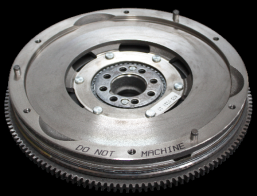
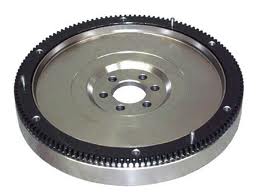
In both cases, the flywheels were dual mass. These experiences led me to research the topic carefully and the results have convinced me that dual mass flywheels are unsuitable for Indian city traffic. Single mass flywheels are superior, both in cost and performance.

Dual Mass Flywheel

Dual Mass Flywheel

Advantages of Dual Mass Flywheels:

+ Smooth while changing gears

+ Great feeling of driving, on highways

Disadvantages of Dual Mass Flywheels:

– Have to replace every 40,000 km

– Very expensive

– Turbo lag

– Noise while starting and switching off the car.

– If the battery is weak, more noise while starting.

Single Mass Flywheel

Single Mass Flywheel

Advantages of Single Mass Flywheels

+ Never have to replace

+ Inexpensive

+ Very good acceleration

+ No turbo lag

+ Better fuel consumption in traffic conditions.

In my opinion, there are no disadvantages to single mass flywheels.  Any supposed benefits  offered by dual mass flywheels are negligible, and certainly not enough to offset the difference in price. The average driver will, 9 times out of 10, not even be able to distinguish between single and dual mass flywheels while driving. I have been advising all my friends to switch to single mass flywheels, and those who have switched are very happy with the results. As for myself, I have unfortunately not been able to find a single mass flywheel for my car, so I have decided to fabricate one myself. I see a business opening here, and, as it turns out, I am not the first to have this idea – I have heard it is a growing business in the USA!

Regardless, I hope I have made my point clear, that in city bumper to bumper traffic, dual mass flywheels are a criminal waste. Perhaps, in the future, if manufacturers improve the quality I may reconsider, but for now, I am firmly in opposition to dual mass flywheels and will not buy a car that is fitted with one.

Posted in Advice | Tagged , , | 2 Comments

Mahindra THAR Braking Problem

Thar

Recently, a problem came to my attention regarding the Mahindra THAR – namely, that the brakes are not functioning as expected. As it turns out, there is a very simple solution to this issue, which I will detail in this post.

First, a brief overview of the working principle of the drum brake and the cause of the problem.

For any drum brake to work properly, the brake shoes must be very close to the drum. Problems arise when the gap between the drum and shoes becomes too much, which generally happens when the brake shoes wear out.

When this gap is created, the piston will require more fluid to travel the increased distance. In turn, the master cylinder has to pump more oil. This is why, when applying the brakes, the pedal will sink closer to the floor.

To eliminate this problem, new generation brake drums have an automatic adjuster.

While examining the Mahindra THAR, however, not only did I find the gap between the brake shoes and drum to be too big, but the drum brake adjuster was not working as it should.

To rectify this, the brake shoes must be manually adjusted to be as close to the drum as possible. This is a trivial procedure that can be performed by any garage technician.

Posted in Advice | Tagged , , , | 2 Comments